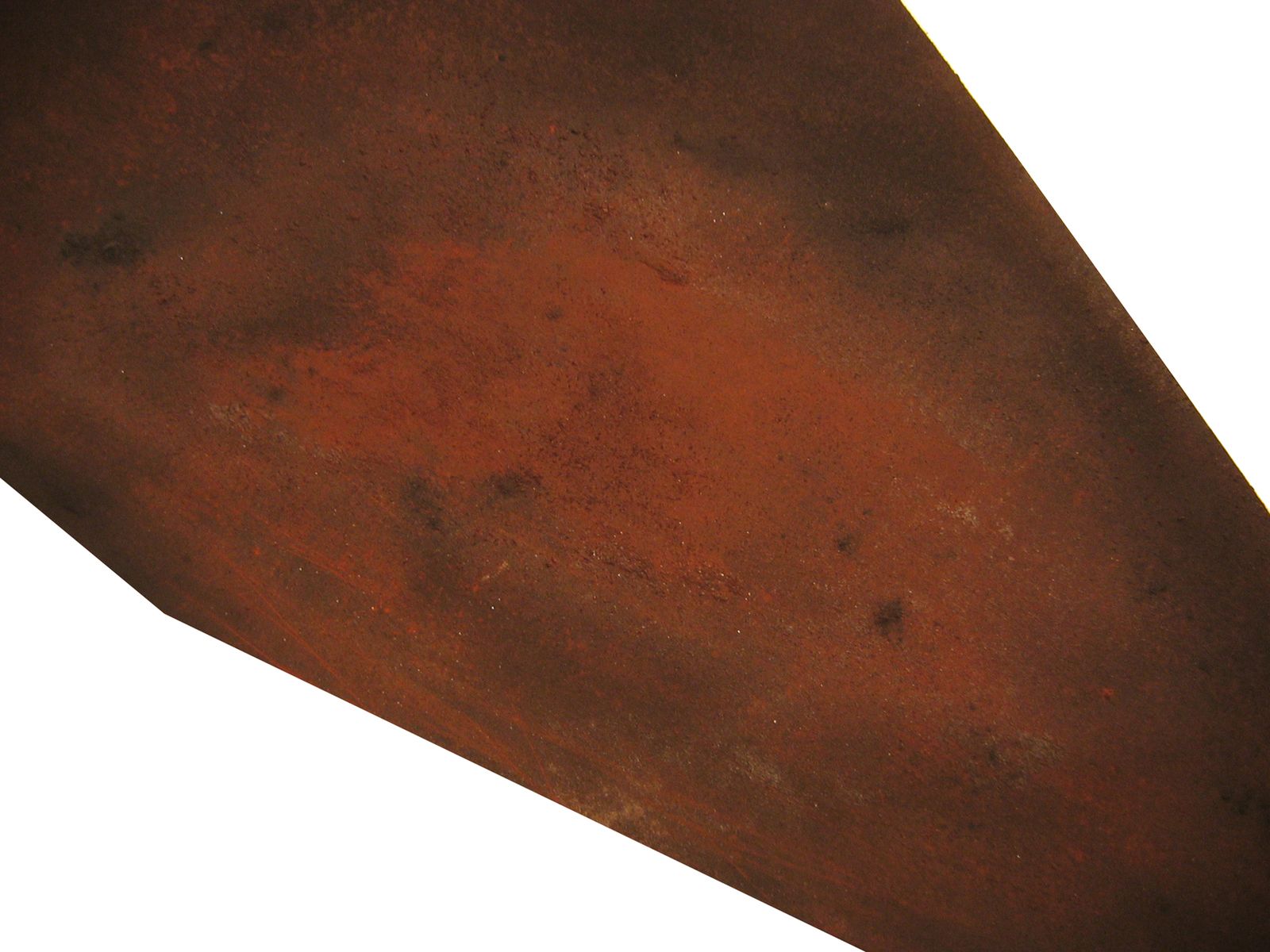
BBZ “15” Möbius
Installation: sonic wooden panel and mixed media With Andrea Lorito (architect) Instantiation of project BBZ — Individual Path 2006
BBZ — Individual Path is a broad project initiated by Andrea Lorito and myself; the final objective was to create a permanent structure in a public area where to experience the space and individual trajectory set by the building/project.

We also created a site specific structure for NT Art Gallery in Bologna, under a set of parameters and logistic obligations dictated by the exhibition’s theme. The page refers to this particular event and the piece “15” (unfortunately I lost the documentation pictures of the event except for one).
My sounding “15” piece was also chosen as a single element in a collective exhibition in Mirano that had texts by mathematicians such as Michele Emmer and Piergiorgio Odifreddi, again another themed exhibition: “art and logic”.
BBZ — Möbius — “15”
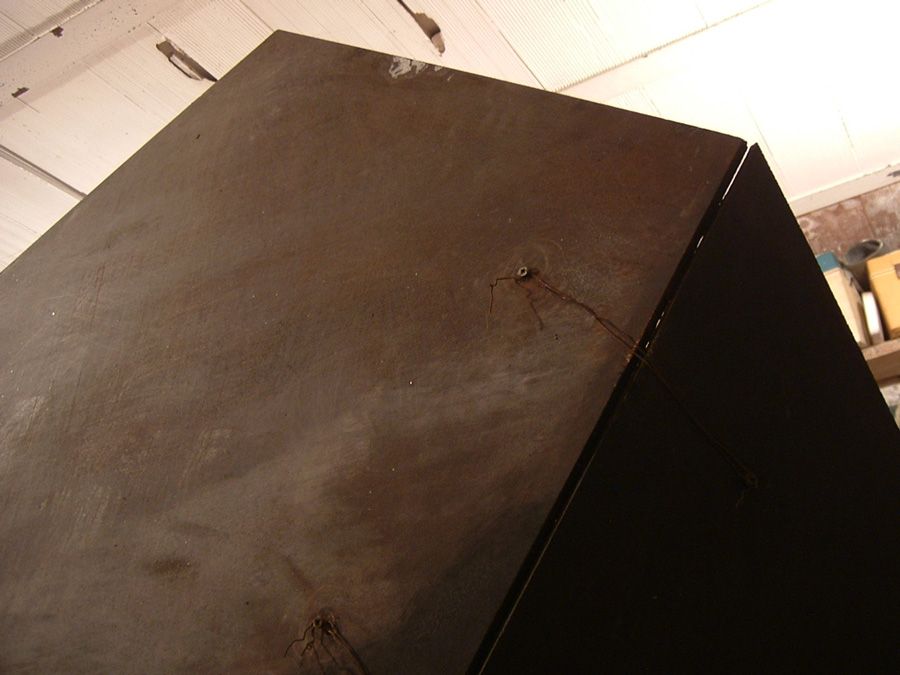
This panel is the 15th of 14 (!) panels that form an open Möbius strip, within the “bbz-möbius” installation. The structure was created specifically for NT Art Gallery in Bologna, for their “ncvi l’8 — Nel Caso V’Interessi L’Infinito”.
“15” is situated along a journey that starts outside the gallery, and possibly resumes the various systemic relationships that build the entire installation:
A. From outside you look at the whole strip situated inside (with a webcam widescreen shot on the whole structure and a screen at the gallery window) in a room at -1 level;
B. Entering the first room (ground level) you can hear the sound coming from the room with the strip and you can start to see a part of it closer, from a geometric window cut in the wall; the sound in this ambient, when you enter, is captured and processed immediately in the room with the strip;
C. We get to the passage (like a suspension from the first and last sound ambient) where “15” is situated, hung in front of a sounding corridor. The panel diffuses a sinusoid simple wave, silence, and another sound which is a multiple of the frequency of the first;
D. At last you enter the room with the Möbius strip, that can be “walked within” up to a curve/arch. The path that the panels form is covered with earth and salt. In the strip room you can hear the sound captured from the first room and processed.
The relations we encounter are at least those between the person, the ambient, the sound and the object.
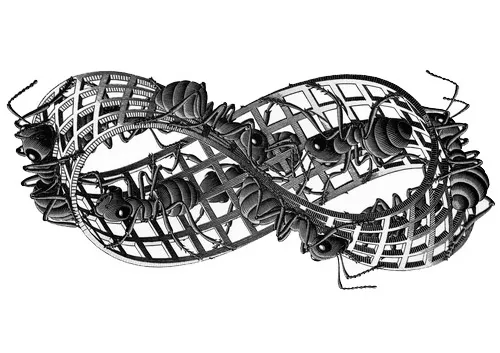 M.C. Escher “Mobius Strip II”, 1963
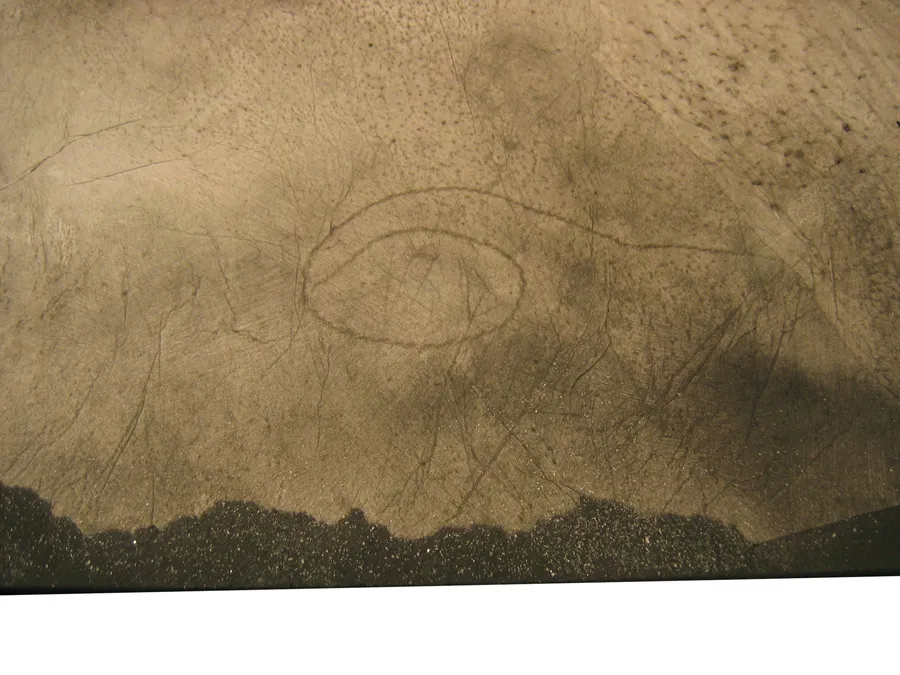 BBZ complete, Bologna
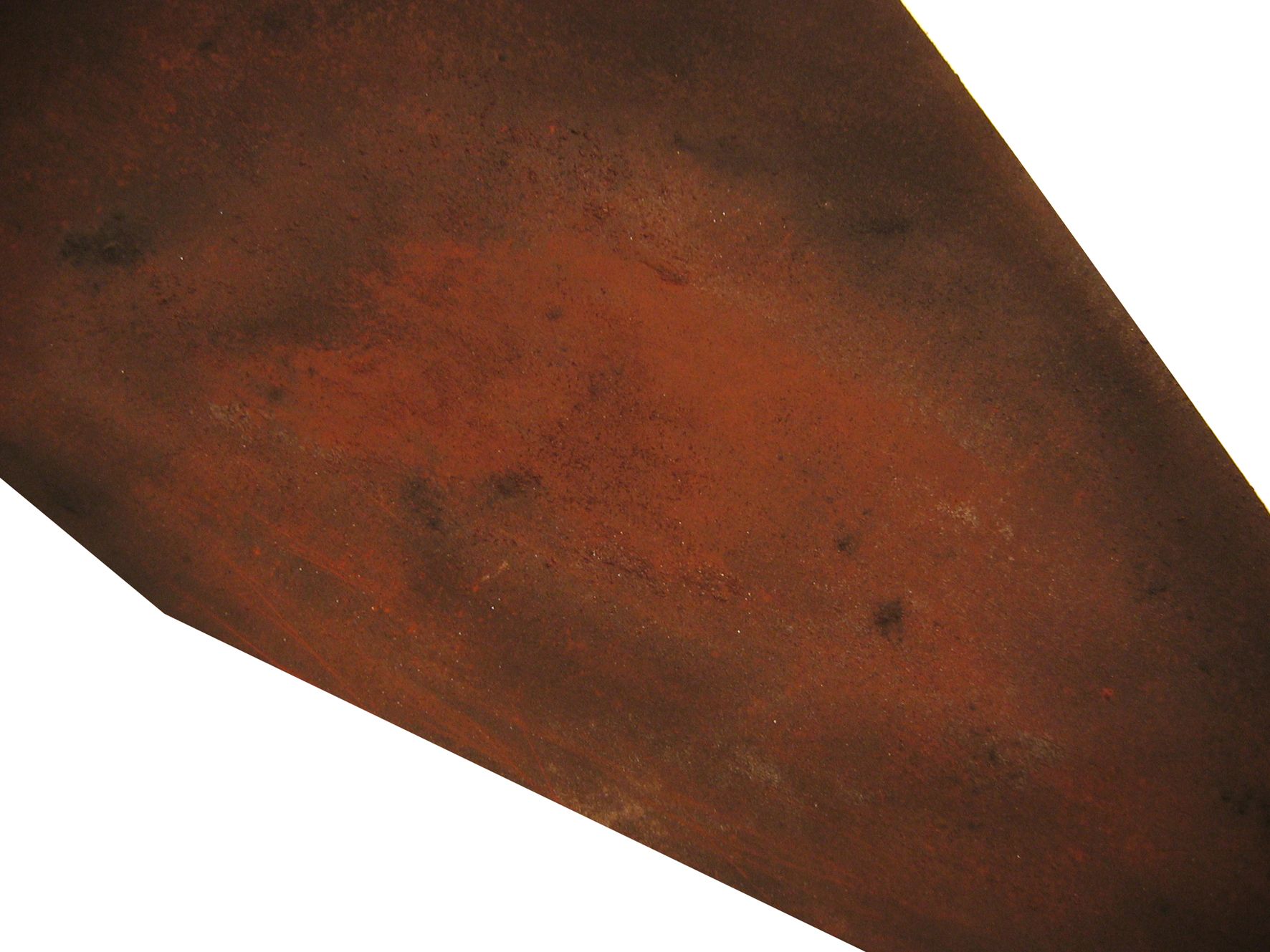
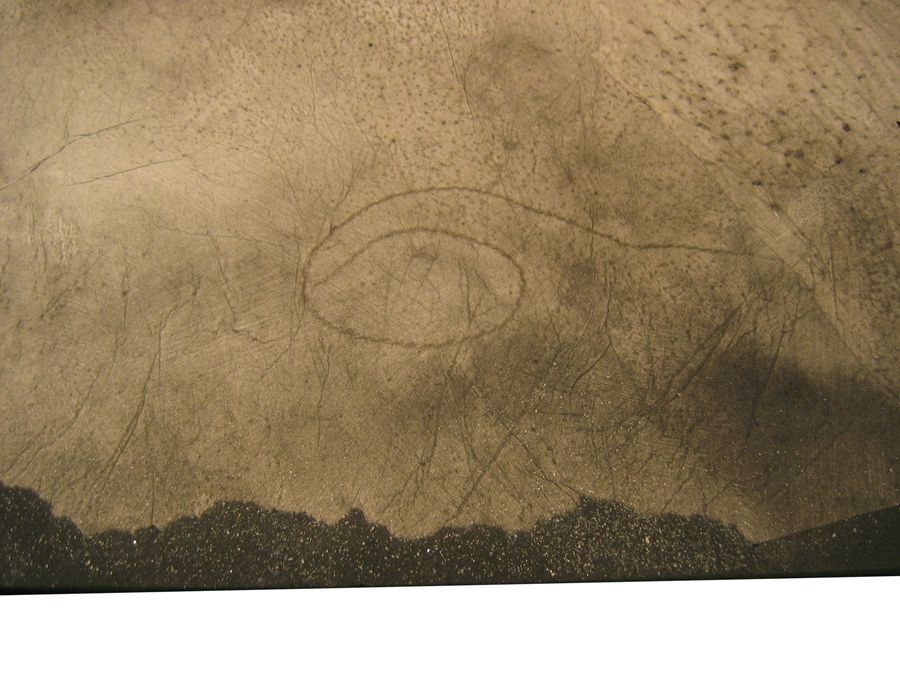
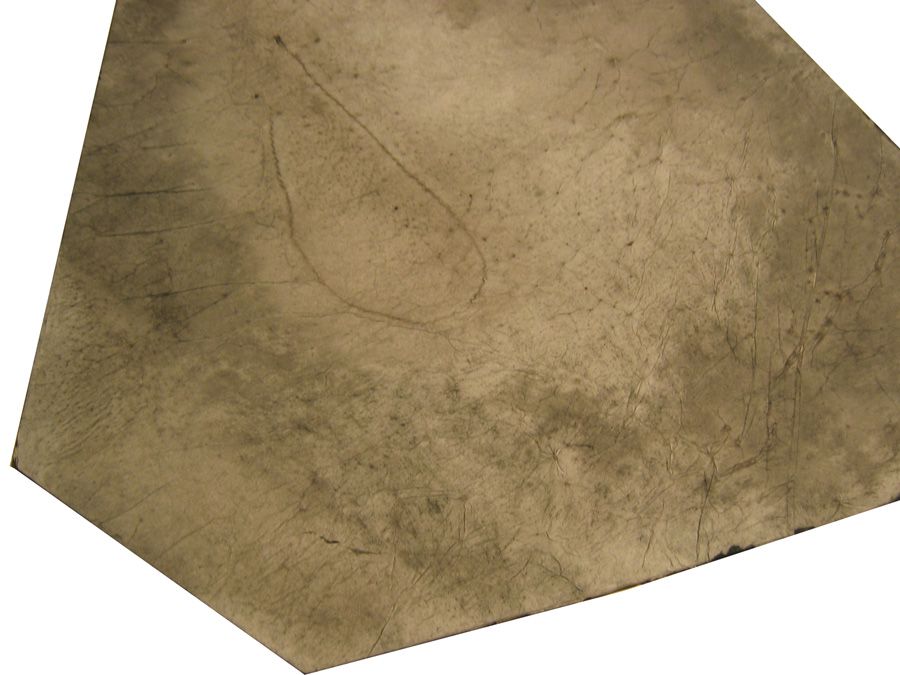
The 14 panels are joined together in a sequence inspired by the Möbius strip, investigating the relation between internal and external space generated by the architecture. The panels are painted on both their faces with different results, yet with similar technique and same material, in order to develop in the space two “instantiations” of the same painting process. The two faces of the strip transform one into the other, creating the idea of perpetual motion, as in Escher’s famous illustration “Mobius Strip II”, 1963.
The form of each single piece builds up from its dimensions, with a simple process of reduction in a sequence of triangles (used in geodetics as much as in topography). The bi-dimensional composition of the pieces is based on a simple grammatical rule: each element is joined to the next by only one side of equal dimension; hence the sequence is formed by successive polygons, that create a theme with individual variations.
The complete procedure, from the triangulation to the rotations when positioning, recalls the technique of origami, but belonging to a structure that self-constructs, claiming the territory given as an animal would do in its own land.
A similar procedural approach was taken for the painting, the basic rule was based on the proportions of elements used for each side of the panels. As a recipe (or algorithm): x amount of an element E in relation Y with another for T times, in an ambient given A (in this case a percent of water and vinyl glue on wood). The painting hence becomes a metaphor of time within the panel and the Möbius strip.
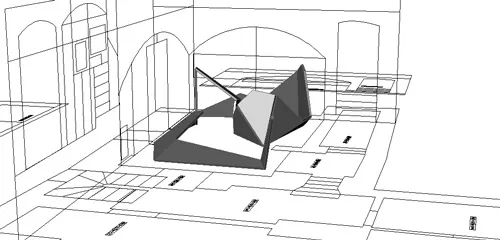 project cad drawing — strip
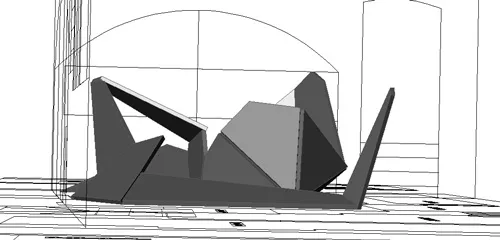 project cad drawing — strip
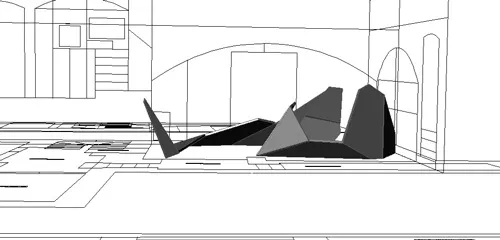 project cad drawing — strip
The sound processing algorithm uses a sequence of delays in the reproduction of captured sound, subject to random variables (filters, delay time, repetition). The variables that dictate the quantity of sound in input and output and the quality of the repetition are numbers produced by the volume of the incoming sound. This creates a situation for which the more sound you make in room A the more sonic material is processed in room B, but in room A the processed sound from room B is elaborated too: a cycle is created, a small example of an 8 turned upside down.
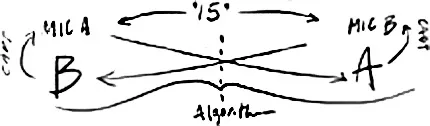
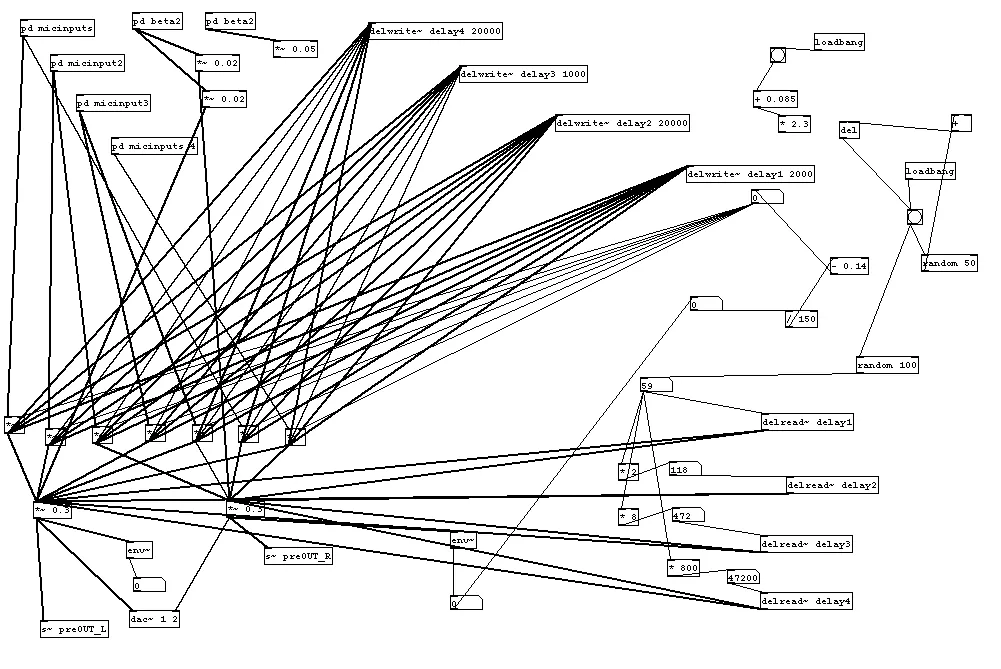
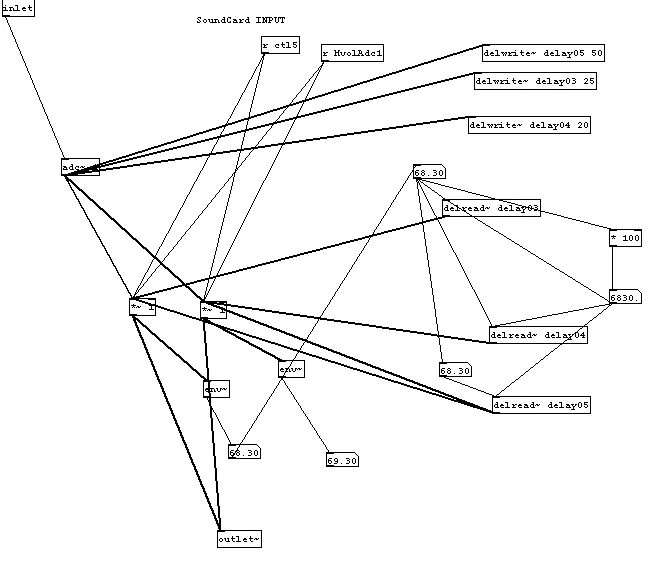
PD patch — volume in A → alteration sound in B → alteration volume in B → alteration sound in A
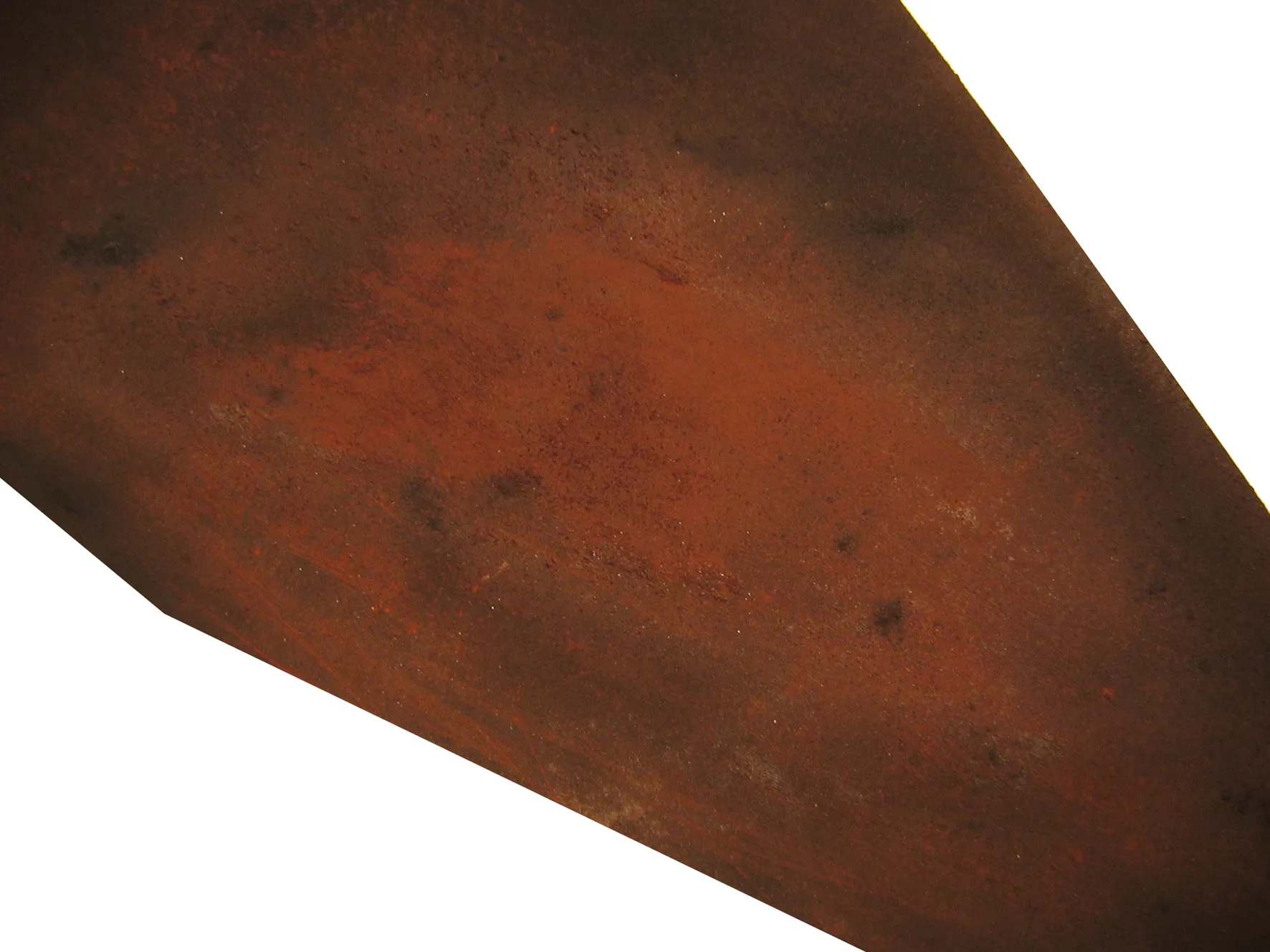
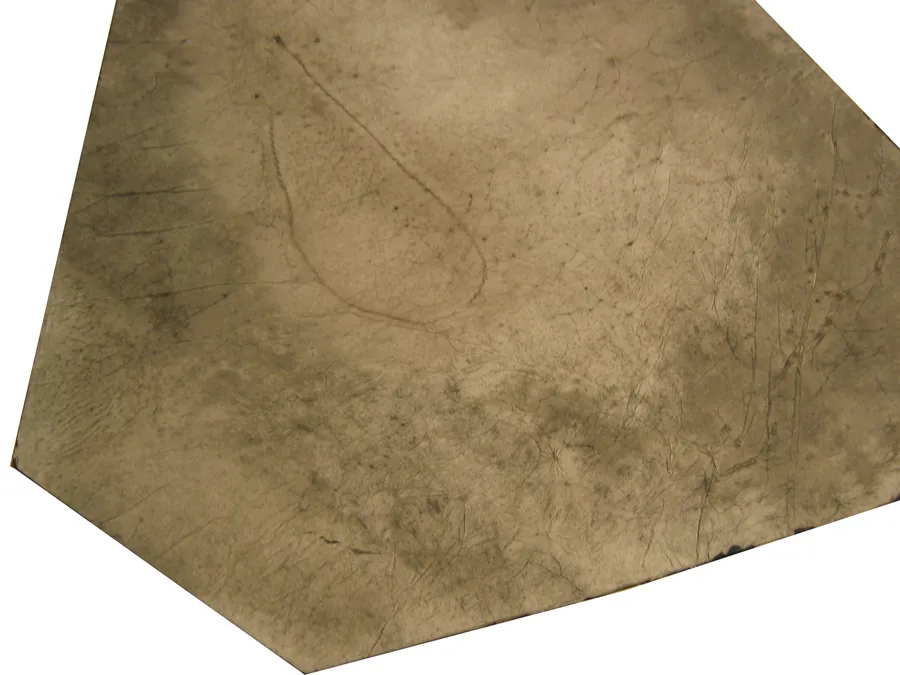
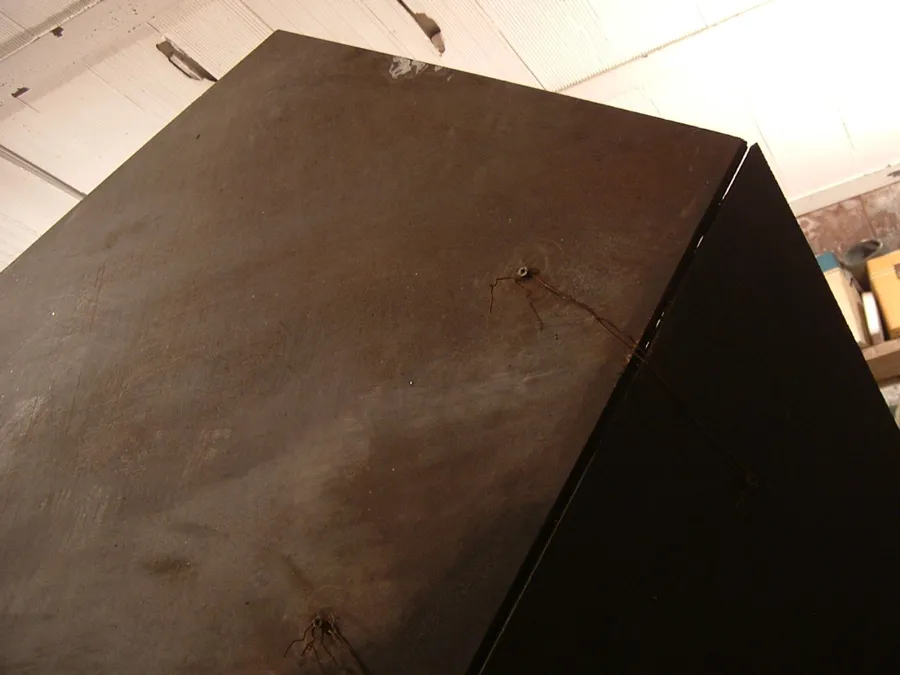

Models and installation views
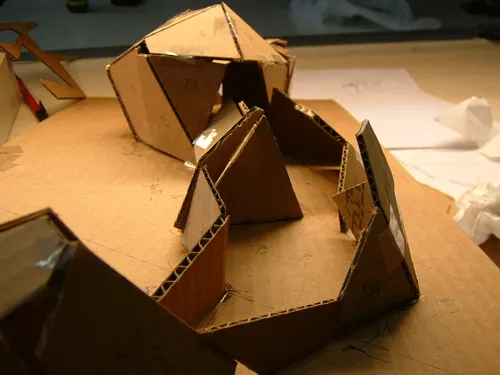 bbz model, cardboard
 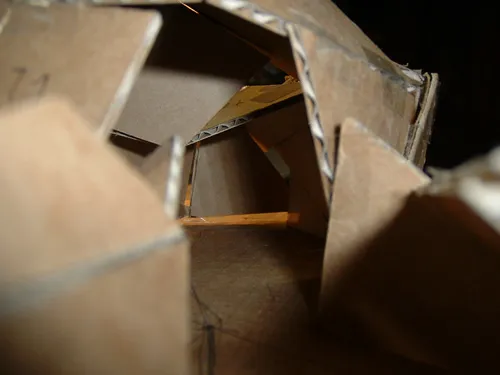 bbz model, cardboard
 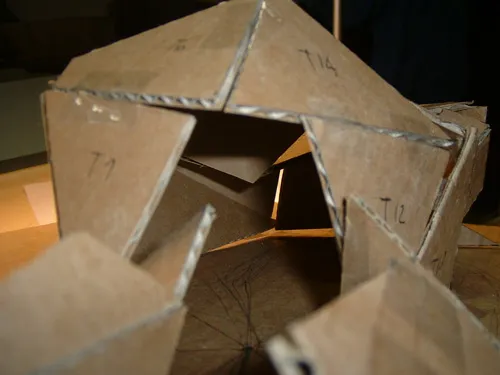 bbz model, cardboard
 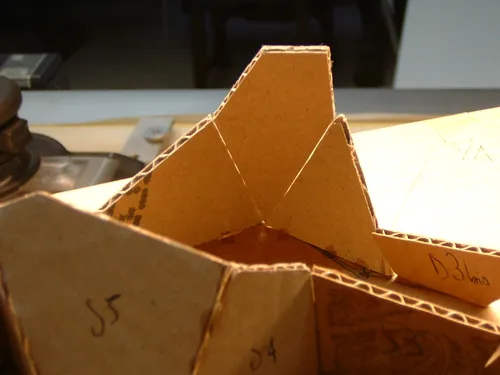 bbz model, cardboard
 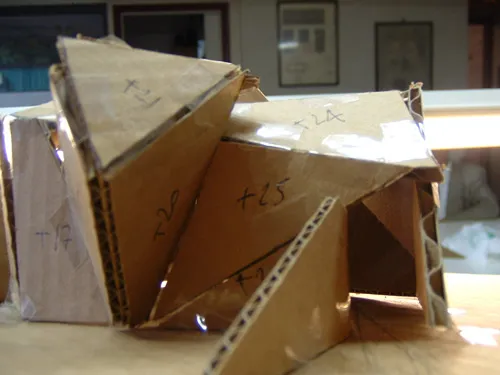 bbz model, cardboard
 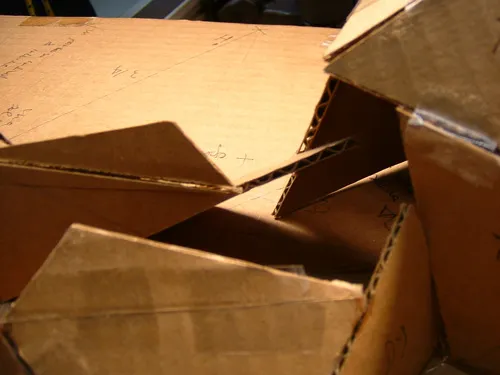 bbz model, cardboard
  bbz model, cardboard
 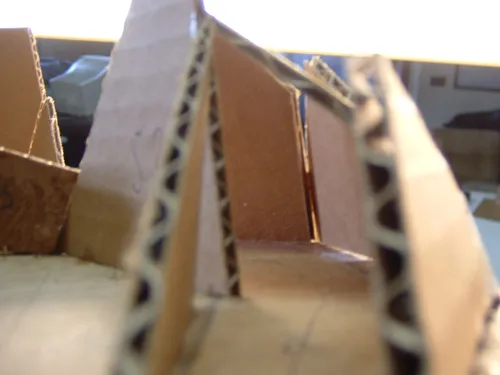 bbz model, cardboard